Solar panel maintenance and cleaning: how to prevent loss of efficiency
In dusty areas, dirty panels can significantly reduce output. How often should they be cleaned, how should you clean them, and what should be checked during maintenance?
Solar panels have no moving parts and require little maintenance. However, little maintenance does not mean no maintenance. Especially in the dusty, dry climate of Southeastern Anatolia, dirt that builds up on panel surfaces can noticeably reduce output.
How often should they be cleaned?
Cleaning at least once a year is recommended, and twice during dusty periods and in agricultural areas. If you notice a significant drop in the production graph in the app on similarly sunny days, it may be time to clean the panels.
How should they be cleaned?
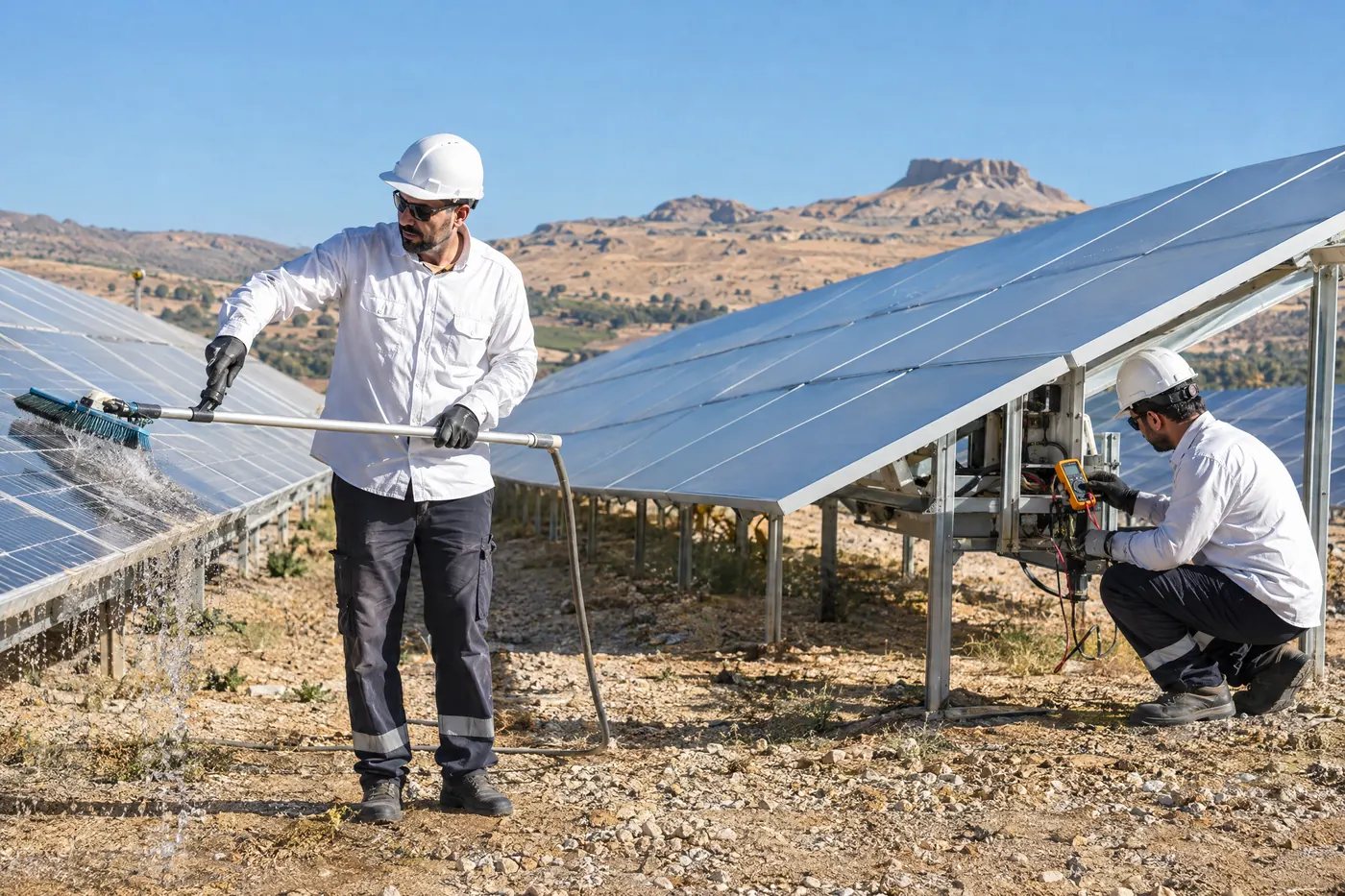
- Clean the panels early in the morning or in the late afternoon, while they are cool
- Use a soft brush and plenty of water, preferably low in limescale
- Do not use detergent, wire brushes or pressure washers
- Do not work on the roof without safety equipment
What we check during maintenance
- Whether connector and terminal connections are secure
- Cables for wear and rodent damage
- Earthing and insulation resistance
- Inverter fault logs and fan cleanliness
- Mounting structure bolts and corrosion
Signs of a fault
If output suddenly drops, a fault code appears on the inverter display, or you notice a crack or colour change in a panel, you can submit a report with photos using the Report a Fault screen in the Dilsiz Solar app. Our team will get back to you as soon as possible.

21 years of experience in electrical energy and 9 years in solar energy. Based in Birecik / Şanlıurfa, we work with rooftop and ground-mounted solar plants, solar-powered agricultural irrigation, battery systems, maintenance and service.
New articles and announcements arrive as instant notifications in the app.